The Basil Charter
Our Company
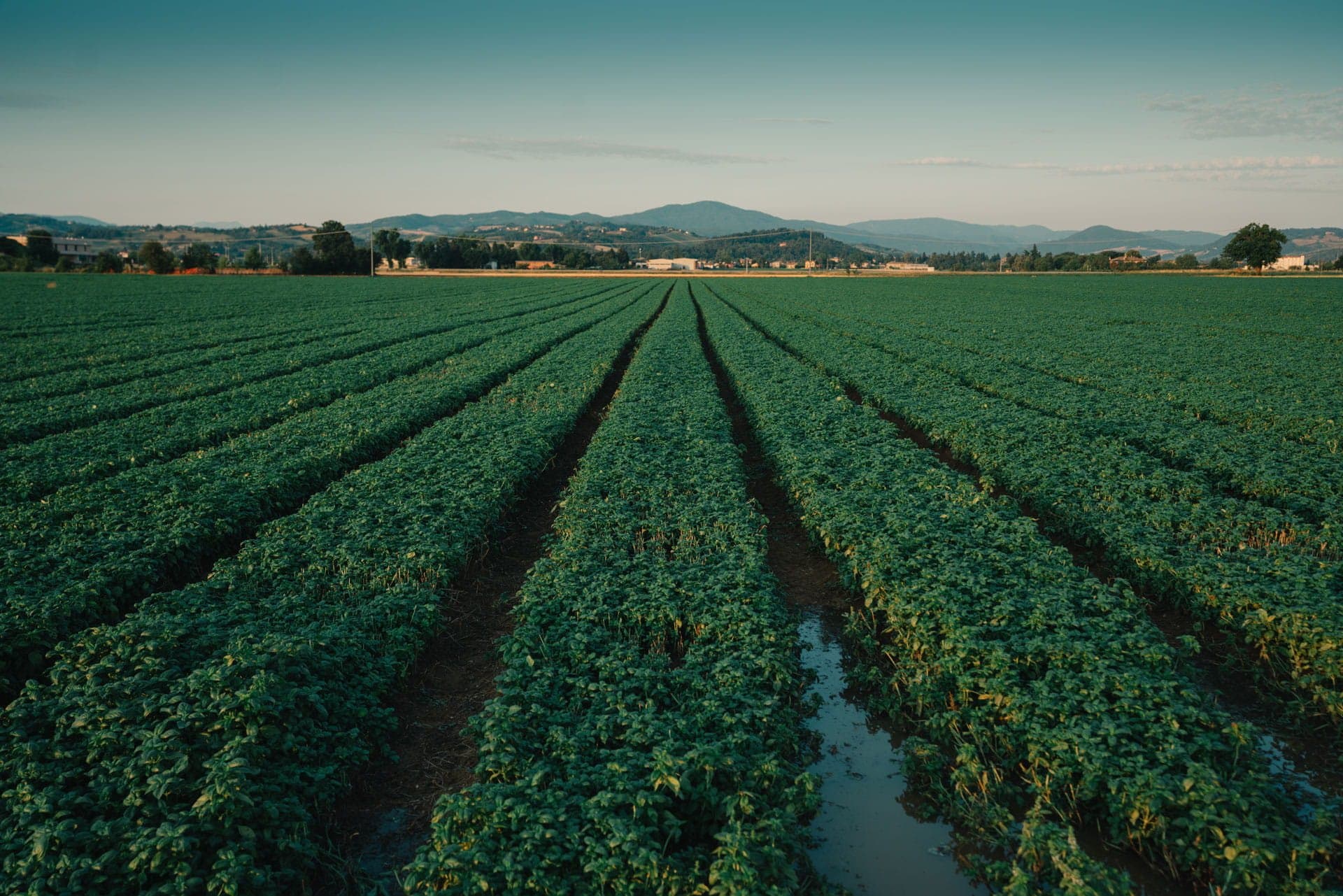
Basil is the beating heart of what we do. Taking care of the basil supply chain means ensuring the quality of our products, working side by side with our producers, and protecting biodiversity.

BASIL, 100% FROM SUSTAINABLE AGRICULTURE
Since 2020, our basil has been grown according to sustainable practices and in compliance with the sustainability criteria of the ISCC PLUS system, thanks to annual checks on every actor in the supply chain.

More space for Biodiversity
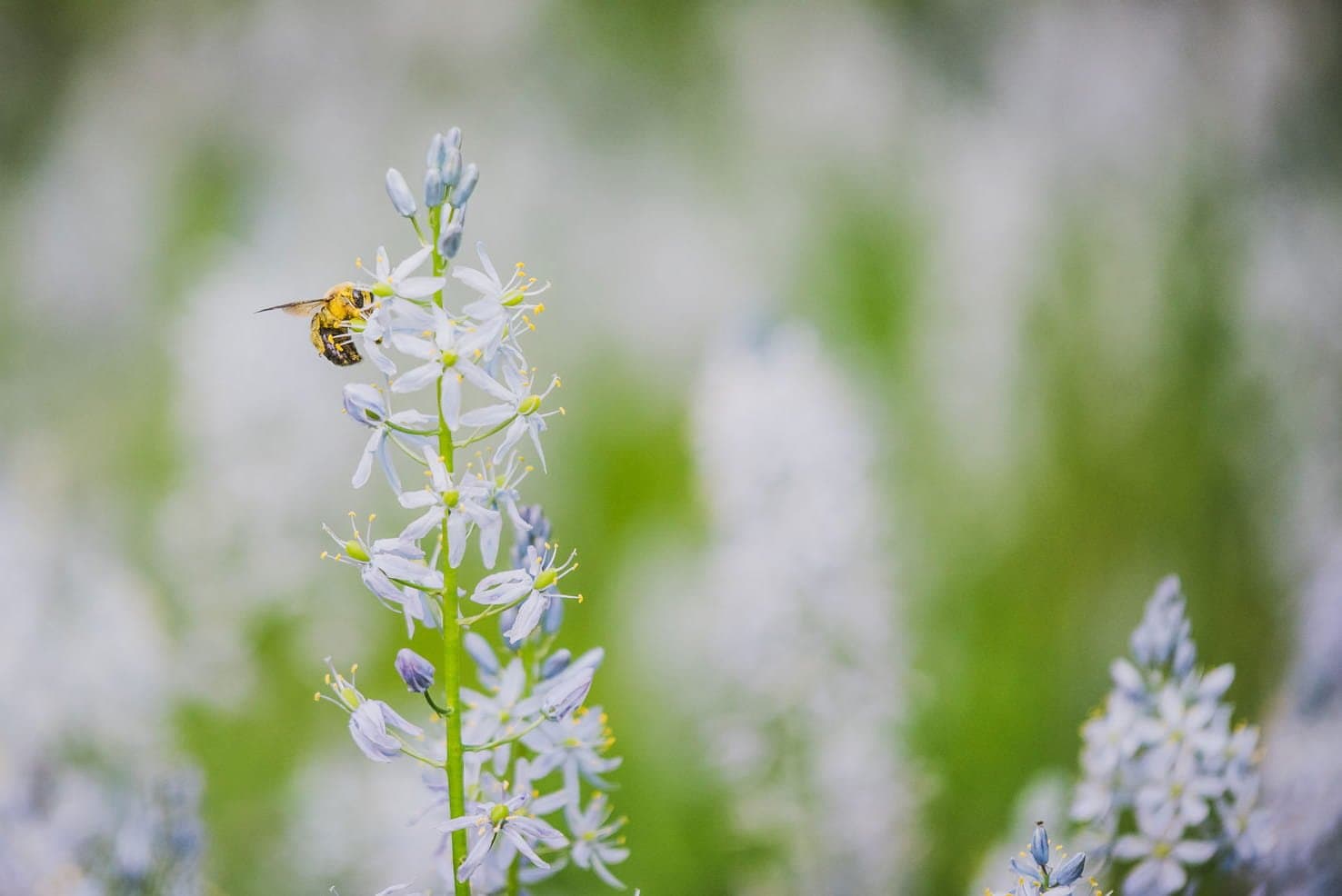
For us, caring for basil means protecting the fields that host it, promoting crop rotation to protect soil health, and the inclusion of flowering areas to protect biodiversity and fight pests.

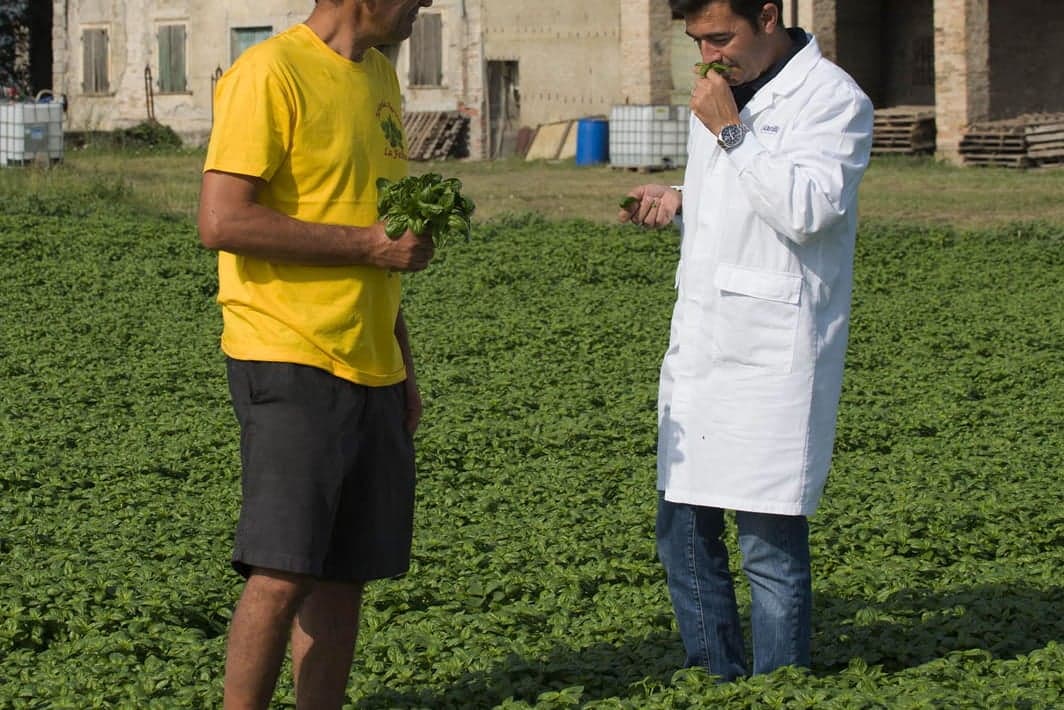
Our farmers, our family
We have built lasting bonds with our farmers, growing and improving together: we can count on excellent raw materials, they plan the work with greater confidence.
BASIL CHARTER
The Basil Charter is based on a set of agronomic, quality, and supplier relationship rules, defined in collaboration with scientific partners (University of Bologna and the Riviera Ligure Chamber of Commerce's Agricultural Experimentation and Assistance Center (CersaA).
It is composed of 9 rules designed to bring quality to our pestos, support the work of farmer communities, and protect biodiversity, including by safeguarding pollinating insects.
01 - RELATIONSHIP WITH FARMERS: <p>All Basil Charter members benefit from medium- and long-term direct contracts that protect the distribution of value along the supply chain through a sustainability premium for each actor involved.</p>

01
RELATIONSHIP WITH FARMERS
All Basil Charter members benefit from medium- and long-term direct contracts that protect the distribution of value along the supply chain through a sustainability premium for each actor involved.
02 - VARIETAL CHOICE: <p>All members of the Barilla’s sustainable basil supply chain must use only varieties specified in the Disciplinary, which have been selected to be naturally tolerant to fungal diseases.</p>

02
VARIETAL CHOICE
All members of the Barilla’s sustainable basil supply chain must use only varieties specified in the Disciplinary, which have been selected to be naturally tolerant to fungal diseases.
03 - CROP ROTATION: <p>All members of Barilla's sustainable basil supply chain, starting from the crop year of joining the project, on an equivalent area (*), must adopt a crop rotation plan that includes at least no replanting of basil. *An area that is equivalent to the amount of basil allocated to Barilla, with a precautionary increase of 10%.</p>

03
CROP ROTATION
All members of Barilla's sustainable basil supply chain, starting from the crop year of joining the project, on an equivalent area (*), must adopt a crop rotation plan that includes at least no replanting of basil. *An area that is equivalent to the amount of basil allocated to Barilla, with a precautionary increase of 10%.
04 - CROP PROTECTION: <p>All members of the Barilla sustainable basil supply chain must apply the guidelines recommended in the Disciplinary, which are more restrictive than current regulations.</p>

04
CROP PROTECTION
All members of the Barilla sustainable basil supply chain must apply the guidelines recommended in the Disciplinary, which are more restrictive than current regulations.
05 - SOIL HEALTH: <p>All members of the Barilla sustainable basil supply chain must monitor the biological quality of soils intended for basil, every 2 years, on 20% as a minimum of the equivalent area (*) by specific analysis (QBSAR and organic substance).</p>

05
SOIL HEALTH
All members of the Barilla sustainable basil supply chain must monitor the biological quality of soils intended for basil, every 2 years, on 20% as a minimum of the equivalent area (*) by specific analysis (QBSAR and organic substance).
06 - IRRIGATION: <p>All members of the Barilla sustainable basil supply chain must adopt precision irrigation systems aimed at increasing efficiency and saving water use.</p>

06
IRRIGATION
All members of the Barilla sustainable basil supply chain must adopt precision irrigation systems aimed at increasing efficiency and saving water use.
07 - BIODIVERSITY AREAS: <p>All members of the Barilla sustainable basil supply chain, starting from the 2021 crop year, must sow an area equal to 3 percent of the equivalent area (*) with plant essences to create habitats for pollinating insects (flower strips, hedges, tree rows, or a combination of the previous alternatives).</p>

07
BIODIVERSITY AREAS
All members of the Barilla sustainable basil supply chain, starting from the 2021 crop year, must sow an area equal to 3 percent of the equivalent area (*) with plant essences to create habitats for pollinating insects (flower strips, hedges, tree rows, or a combination of the previous alternatives).
08 - HARVESTING STANDARDS: <p>All members of the Barilla sustainable basil supply chain are required to cut the plant with a maximum length of 30 centimeters.</p>

08
HARVESTING STANDARDS
All members of the Barilla sustainable basil supply chain are required to cut the plant with a maximum length of 30 centimeters.
09 - DECISION SUPPORT SYSTEMS-FIELD AND SUPPLY CHAIN DIGITIZATION: <p>All members of the “Basil Charter,” starting from the 2024 crop year, must adopt decision-support systems, available in Barilla Farming, to optimize agricultural inputs according to the principles of sustainable agriculture.</p>

09
DECISION SUPPORT SYSTEMS-FIELD AND SUPPLY CHAIN DIGITIZATION
All members of the “Basil Charter,” starting from the 2024 crop year, must adopt decision-support systems, available in Barilla Farming, to optimize agricultural inputs according to the principles of sustainable agriculture.

Look for the “Basil from Sustainable Agriculture” logo on the shelves of your local supermarket.
Barilla's commitment to sustainability, outlined in the Code of Sustainable Agriculture, certifies basil production globally.
We are proud to collaborate with
ISCC SYSTEM
The ISCC PLUS (International Sustainability and Carbon Certification) scheme is a food-related extension of the ISCC traceability and sustainability certification.
It is awarded on a voluntary basis, and allows us to monitor that every actor in our supply chain meets the sustainability and traceability criteria of this scheme.
For more information, visit https://www.iscc-system.org/.

RINA, Ente di Certificazione Indipendente
RINA is an independent certification body that conducts annual audits of every actor in the basil supply chain, ensuring that all parameters of the ISCC PLUS certification system are always fully respected and certified-from the fields to the production plant. To learn more visit: www.rina.org/it/business/human-capital/certification

Dipartimento di Scienze Agrarie e Alimentari dell'Università di Bologna
The Department of Agricultural and Food Sciences of the University of Bologna (Alma Mater Studiorum) is our scientific partner in this project. The Department validated the benefits provided by the Basil Charter project in terms of Biodiversity and supported us in defining the most efficient program to protect basil from diseases.

Centro di Ricerca e Sperimentazione Agricola di Albenga
The Center for Agricultural Research and Experimentation in Albenga (CeRSAA) is our scientific partner in this project. CeRSAA is one of Italy's leading centers of expertise for basil cultivation and has helped us in the development of sustainable practices and the annual definition of the most effective program to protect basil from disease.

CNR-IBE
The National Research Council, Florence-based Institute for Bioeconomics, has been working with Barilla to innovate digital agriculture for more than 30 years. As part of the Basil Charter, it leverages artificial intelligence to support basil farmers, advising them on best practices at the right time and warning them in advance of possible diseases.


Barilla Pesto is prepared with care, with quality ingredients and following a single watchword: delicacy.

WHAT IS THE ORIGIN OF BARILLA PESTO BASIL?
Each year, more than 7,000 tons of basil arrive at our Rubbiano factory, and then join with the other ingredients to become our Barilla Pesto. Every single basil leaf we use in our Barilla Pesto is 100% Italian and comes mainly from fields located near our factories to minimize the time between harvesting and processing.

IS THERE GLUTEN IN BARILLA PESTOS?
All of our Pesti are gluten-free and are suitable for those with gluten intolerance.

DOES THE USE OF BASIL FROM SUSTAINABLE AGRICULTURE IMPACT THE FLAVOR OF BARILLA PESTO?
We at Barilla have very high food safety and quality standards for our products and do not compromise on this. In fact, we have been able to certify our basil comes from sustainable farming preserving the quality of our Pesti and their delicious taste!

WHICH BARILLA PESTOS ARE MADE WITH BASIL FROM SUSTAINABLE AGRICULTURE?
With the exception of Pesto Ricetta Gourmet which is still undergoing ISCC PLUS certification, all of our Barilla Pestos containing basil are made with “basil from sustainable agriculture.” However, we have decided to apply ll logo “basil from sustainable agriculture” only on the labels of Pesto alla Genovese, Pesto alla Genovese without garlic, and Pesto Basilico e Rucola.
Discover all Pesto Barilla range
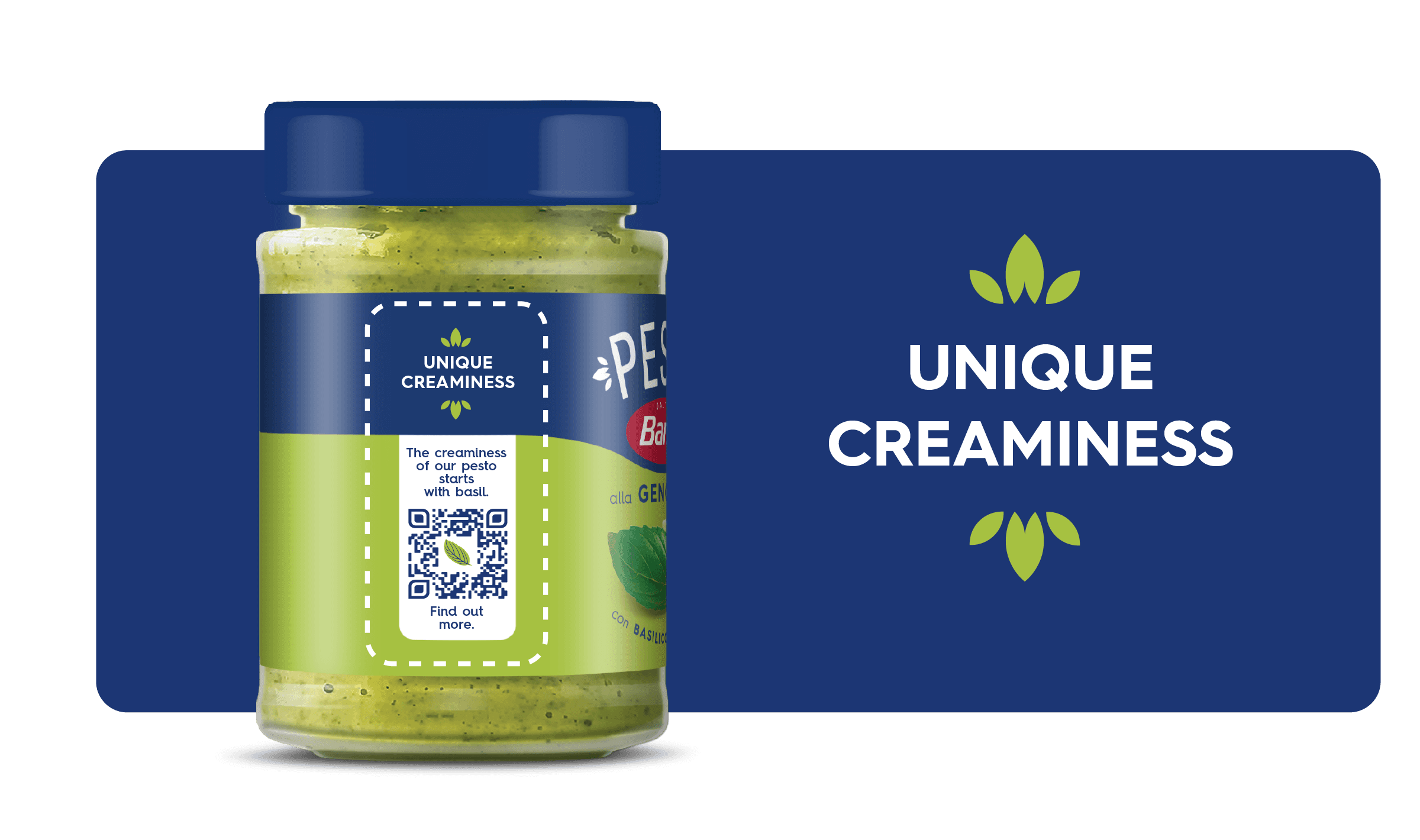
Barilla Pesto is the flavor loved by everyone, giving that extra touch to your recipes on the most diverse occasions. A unique creaminess, born from the meeting of fresh Italian Basil and Parmigiano Reggiano DOP.