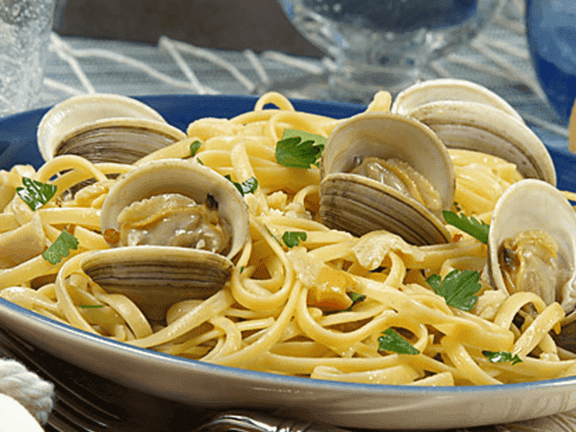
Barilla® Linguine with Clams
Ingredients
Individuals with allergies or specific dietary concerns should verify that the ingredients they utilize for the recipes comply with their restrictions.
Method
Step 1
Soak clams in water and sea salt for one hour,
Step 2
Scrub well and rinse with fresh water
Step 4
Bring a large pot of water to a boil
Step 6
Heat half of the olive oil in a large skillet; add chopped garlic, red pepper flakes and sauté. Add clams and white wine; cover skillet with a lid
Step 7
Cook over medium heat until the clams are completely open. Discard any closed clams and half of the shells. Leave some clams in the shell as a garnish.
Step 8
Cook Linguine according to pack directions.
Step 9
Make sure you reserve some of the cooking water for later.
Step 10
Add Linguine to the skillet with clams. Toss well adding some of the cooking water if needed until the pasta is al dente and well combined with the sauce
Step 11
Stir in remaining olive oil and Sprinkle with chopped parsley before serving

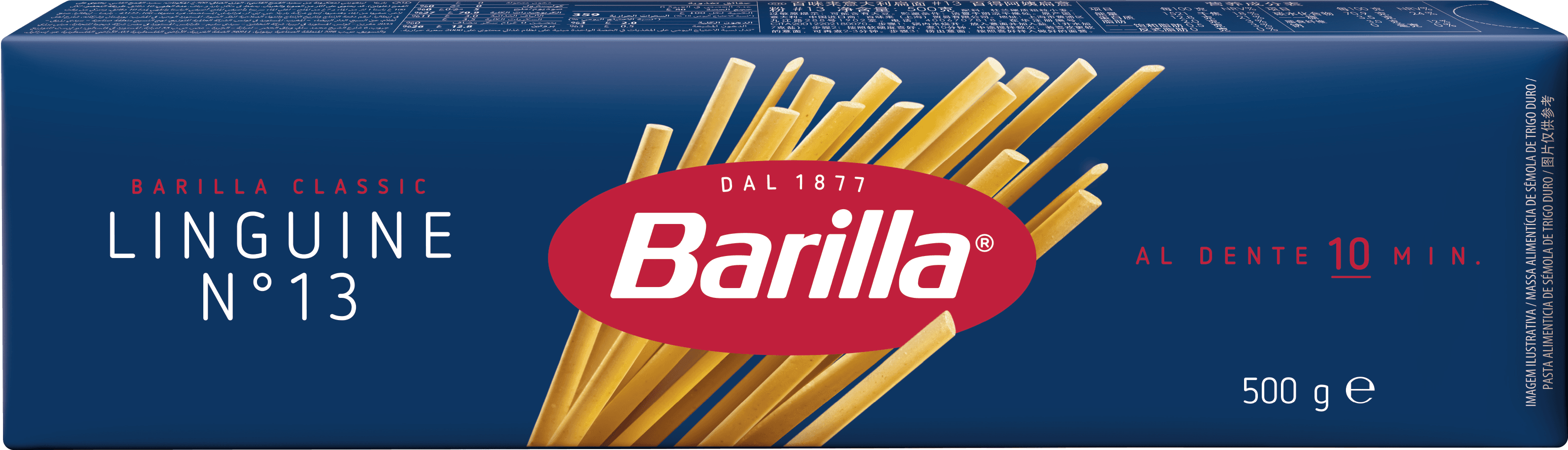
Linguine
Linguine, a close relative of Fettuccine, is made from long, flat strands of pasta, but is thinner and narrower. Linguine, which means “little tongues” in Italian, originated in the Liguria region of Italy. Throughout this area, the air is fragrant with salty ocean breezes and the aroma of delicious food cooking.
Shape
Linguine
Cook time
10 minutes
Pack size
500g
Range
Classic Blue Box
Linguine

Linguine, a close relative of Fettuccine, is made from long, flat strands of pasta, but is thinner and narrower. Linguine, which means “little tongues” in Italian, originated in the Liguria region of Italy. Throughout this area, the air is fragrant with salty ocean breezes and the aroma of delicious food cooking.
Shape
Linguine
Cook time
10 minutes
Pack size
500g
Range
Classic Blue Box


